Best Time to See Elk in Yellowstone—Including the Fall Rut
★ Key Takeaways (TL;DR)
Experience Yellowstone's most visible megafauna across seasons, with focus on the dramatic fall mating season. For 2026, the prime window is June through September. Book early for sunrise/sunset slots.
Guided Backcountry ATV Tours
Deploy from Island Park (20 mins from West Yellowstone). Explore rugged mountain trails that standard tourists never see. Daily departures.
When to See Elk in Yellowstone (Season-by-Season)
Elk are Yellowstone's most frequently observed large mammals — roughly 10,000–20,000 inhabit the ecosystem depending on season (up to 30,000 across the Greater Yellowstone area). They're the animal you're most likely to see on any given day in the park. But the quality of elk viewing varies dramatically by season.
Spring: May–June (Migration and Calving)
Spring sees elk transition from winter ranges in northern valleys to summer highlands. This migration period offers reliable sightings in Lamar Valley and Hayden Valley as herds move between elevations. Calves arrive in late May and June — a newborn elk calf can stand and walk within 30 minutes of birth. Watching a protective cow defend her calf from coyotes or ravens provides some of the most intimate wildlife viewing in the park.
The Madison River corridor between Madison Junction and West Yellowstone is a particularly underrated spring elk viewing area. Herds graze the riverbanks at dawn and dusk with far fewer tourists than the northern valleys.
Summer: July–August (Dispersed but Present)
Summer dispersal moves herds to subalpine meadows and forest edges above 7,500 feet, reducing valley visibility. However, elk never truly disappear. Early morning and dusk still offer sightings along meadow edges and water sources — thermoregulation drives elk to seek shade, water, and elevation during the heat of day.
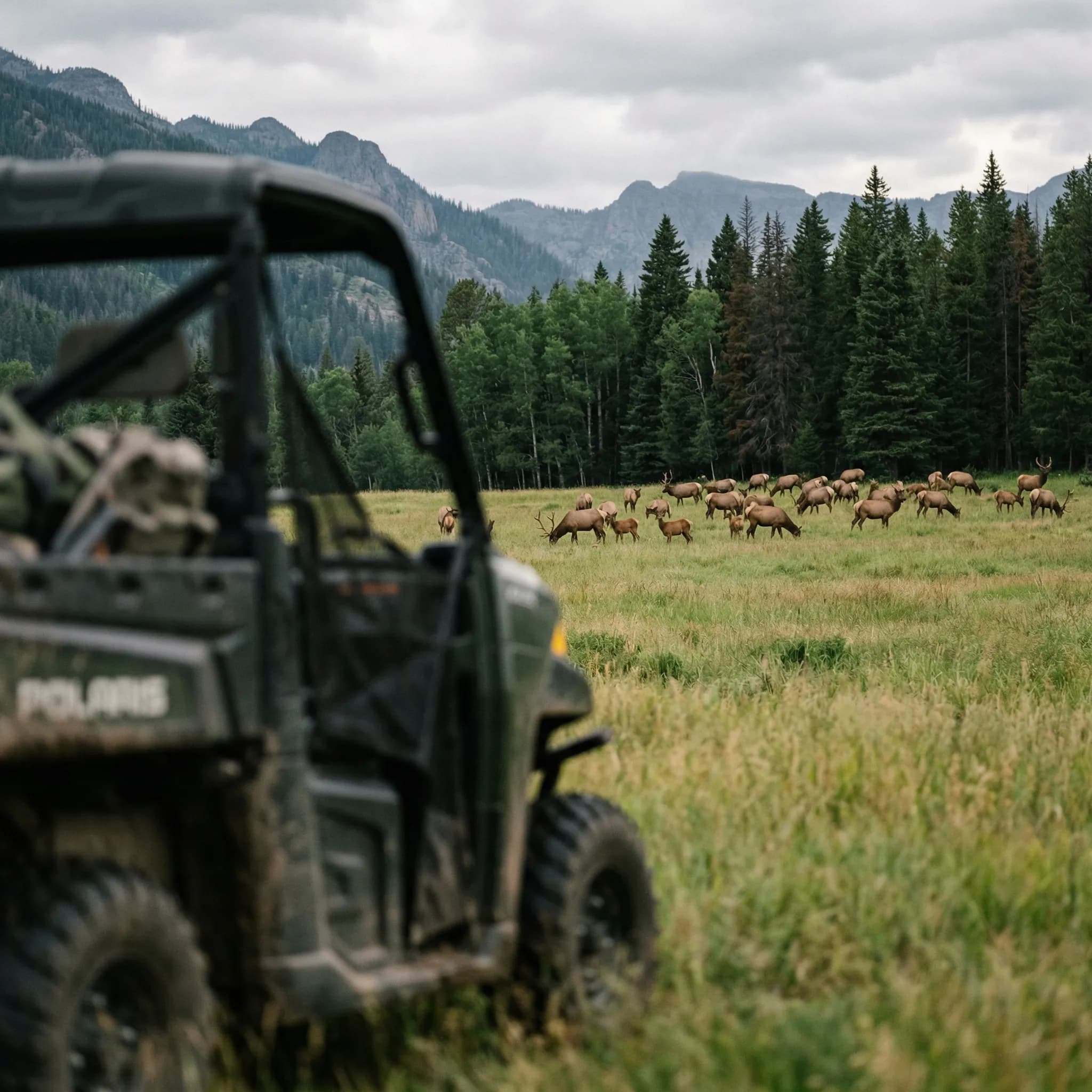
In the backcountry around Island Park, summer elk congregate in high-elevation meadows along the Continental Divide. Nomad Yellowstone's ATV tours access these zones at 8,500–10,000 feet where elk summer in herds of 20–50 animals, grazing in alpine wildflower meadows that car-bound tourists never reach.
Fall: September–October (The Rut — Peak Viewing)
Fall triggers the elk rut — the breeding season — and everything changes. Beginning mid-September and peaking through mid-October, bulls enter a state of urgency driven by testosterone surges. They establish territories, challenge rivals, and vocalize constantly.
The bugle: The sound of a bugling bull elk is Yellowstone's most stirring wildlife soundtrack. It begins as a low, resonant tone, rises to a high-pitched scream, and finishes with a series of grunts. It's audible for over a mile. No recording does it justice — hearing it echo off canyon walls at dawn is transformative.
The rut creates three types of dramatic behavior:
- Sparring: Bulls with interlocked antlers clash for dominance, sometimes for minutes at a time
- Herding: Dominant bulls collect and defend harems of 10–30 cows, constantly circling and vocalizing
- Wallowing: Bulls dig shallow depressions, urinate in them, and roll in the mud to spread scent — a bizarre but compelling display
Best rut locations: Mammoth Hot Springs (elk rut right on the hotel lawn), Madison River corridor, Hayden Valley, and the backcountry meadows east of Island Park.
Winter: November–March (Northern Range Concentration)
Winter concentrates elk on the northern range — the Lamar Valley through Gardiner corridor — where wind-swept ridges expose grass beneath snow. Herds of several hundred animals are common. Viewing conditions are excellent when roads are open, though cold and limited daylight require commitment.
Why the Backcountry Matters for Elk
Roadside elk in Yellowstone are habituated to vehicles. They tolerate traffic and crowds in ways that strip away the wildness of the encounter. Backcountry elk — the herds you encounter on Nomad Yellowstone's ridgeline ATV routes — are genuinely wild. They respond to your presence as they would any large animal: watchful, alert, and authentically wild. The experience is fundamentally different.
Nomad Yellowstone's September and October ATV tours position you in prime elk habitat during peak rut activity. Your guide can locate bugling bulls, interpret herd movements, and explain the behavioral drama unfolding before you. From $179 per seat.
Related reading: Best Time to See Bison in Yellowstone · Best Month for ATV Tours Near Yellowstone · Yellowstone Fall Wildlife Guide
Ready to Go?
Don't just read about it. Experience the wilderness yourself on our premium guided electric-ATV tours.
Check Availability