Where and When to See Moose Near Yellowstone and Island Park
★ Key Takeaways (TL;DR)
Discover moose habitat around Island Park and the best seasons for spotting these solitary giants. For 2026, the prime window is June through September. Book early for sunrise/sunset slots.
Guided Backcountry ATV Tours
Deploy from Island Park (20 mins from West Yellowstone). Explore rugged mountain trails that standard tourists never see. Daily departures.
Moose Viewing Near Yellowstone: An Island Park Specialty
Moose are Yellowstone's shyest megafauna — and among the most rewarding to encounter. Unlike bison, elk, and even bears, moose are solitary animals that prefer dense, wet habitat. They don't congregate in open valleys or walk down roads. Finding them requires knowing where to look, and the best moose habitat isn't inside Yellowstone at all — it's in Island Park.
Why Island Park Is Better Than Yellowstone for Moose
Yellowstone's moose population has declined significantly since the 1990s, likely due to increased grizzly bear predation on calves, habitat changes from the 1988 fires, and warming temperatures reducing willow growth. Sightings within park boundaries are genuinely uncommon.
The Island Park corridor — specifically the Henry's Fork of the Snake River and its tributary wetlands — tells a different story. This valley ecosystem provides everything moose need:
- Willows: Moose browse up to 60 pounds of willow, aspen, and aquatic vegetation daily. The Henry's Fork corridor has extensive willow stands.
- Water: Moose are excellent swimmers and regularly wade into ponds and slow rivers to feed on aquatic plants. Beaver ponds along the Henry's Fork are prime moose habitat.
- Cover: Dense forest adjacent to wetlands provides escape cover from predators and thermal refuge from summer heat.
Best Seasons for Moose Viewing
Spring (May–June): Calving Season
Spring is the most productive moose viewing season. Cows emerge from winter cover with calves — typically twins, occasionally singles. Newborn moose calves are vulnerable and their mothers are fiercely protective, making spring observations both memorable and educational. The best spots are willow-lined sections of the Henry's Fork where cows feed while calves nurse.
Summer (July–August): Dawn and Dusk
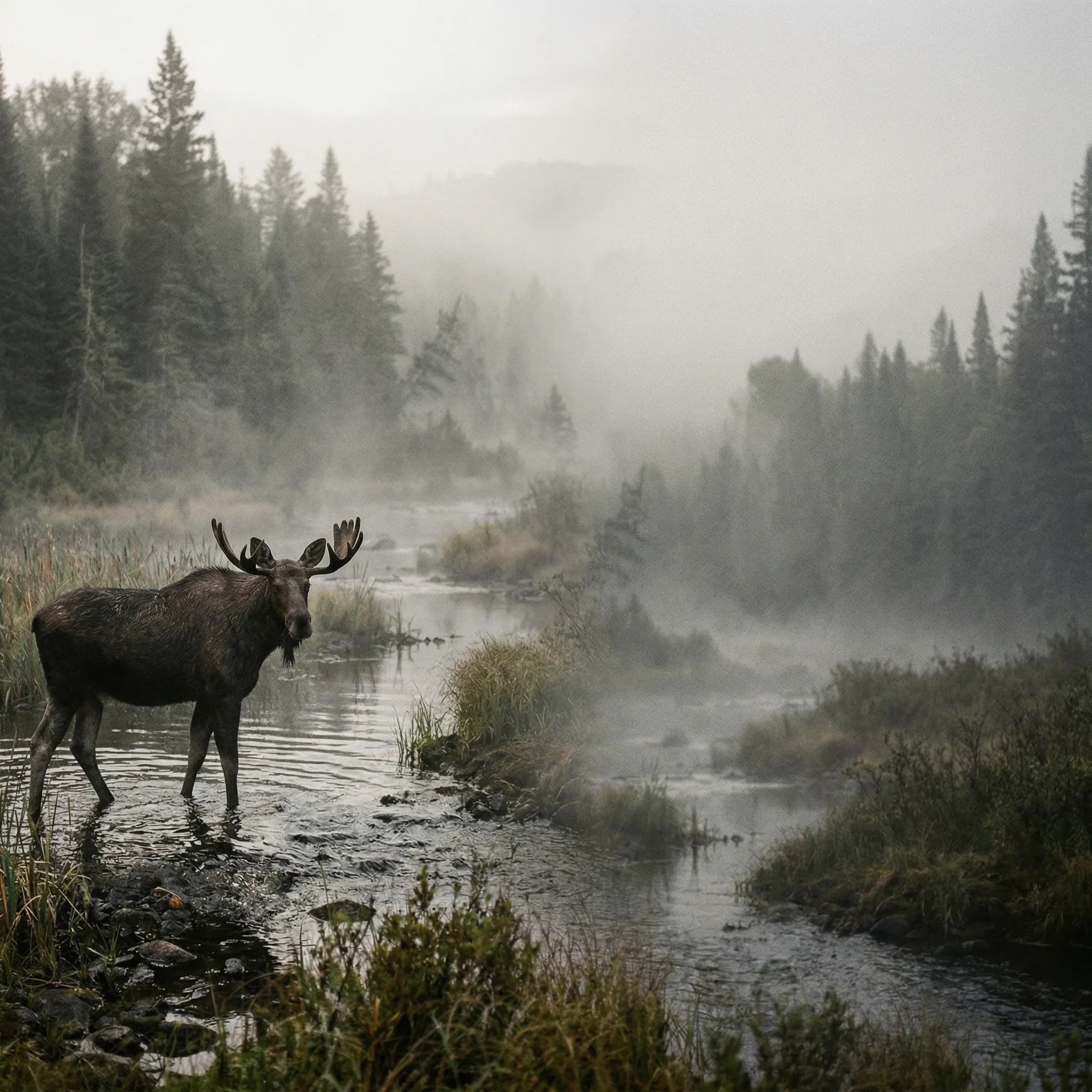
Summer heat drives moose into water and shade during midday, but early morning (before 7 AM) and dusk produce reliable sightings at beaver ponds, lake edges, and marshy meadows. Moose standing chest-deep in a pond, submerging their heads to pull up aquatic plants, is one of Island Park's signature wildlife images.
Fall (September–October): The Rut
Bull moose become visible during the fall breeding season. Unlike the loud, social elk rut, moose rut is quieter and more solitary — bulls seek out individual cows rather than collecting harems. However, bulls in rut are more mobile and less cautious, increasing sighting odds. Their massive antlers (spans of 4–5 feet are common) make them unmistakable even at distance.
Winter: Concentrated but Remote
Winter consolidates moose into lower-elevation willow stands where browse remains accessible above snow. They're present but accessing them requires snowmobile or snowshoe travel.
Where Exactly to Look
The most reliable moose-viewing locations around Island Park:
- Henry's Fork corridor — willow-lined riverbanks from Mack's Inn to the Harriman State Park boundary
- Beaver ponds along Forest Road 291 and connecting trails
- Harriman State Park — the Silver Lake and Golden Lake loop trail
- Backcountry meadows accessible via Nomad Yellowstone's ATV routes — guides know specific beaver ponds and willow stands where moose feed regularly
Moose Safety
Moose are deceptively dangerous. They're not aggressive by nature, but a cow with calves or a bull in rut will charge without hesitation if they feel threatened. Moose attacks cause more injuries than bear attacks in several western states. Always maintain at least 25 yards distance, and if a moose's ears pin back or it raises the hackles on its shoulders, back away immediately — these are warning signs of an imminent charge.
Nomad Yellowstone runs guided, passenger-only ATV expeditions from Island Park, Idaho — 20 minutes from West Yellowstone. Your guide's local knowledge of specific beaver ponds, willow stands, and water sources transforms moose viewing from a hope into a realistic expectation. From $179 per seat.
Related reading: Henry's Lake Area Guide · Best Time to See Elk in Yellowstone · Island Park Wildlife Viewing Guide
Ready to Go?
Don't just read about it. Experience the wilderness yourself on our premium guided electric-ATV tours.
Check Availability